WMC Foundation’s Future Wisconsin Project released its Wisconsin Competitiveness Report in February 2026. The report takes a detailed, metric-driven look at where Wisconsin is falling behind on key competitive indicators and offers policy solutions to put the state back on track.
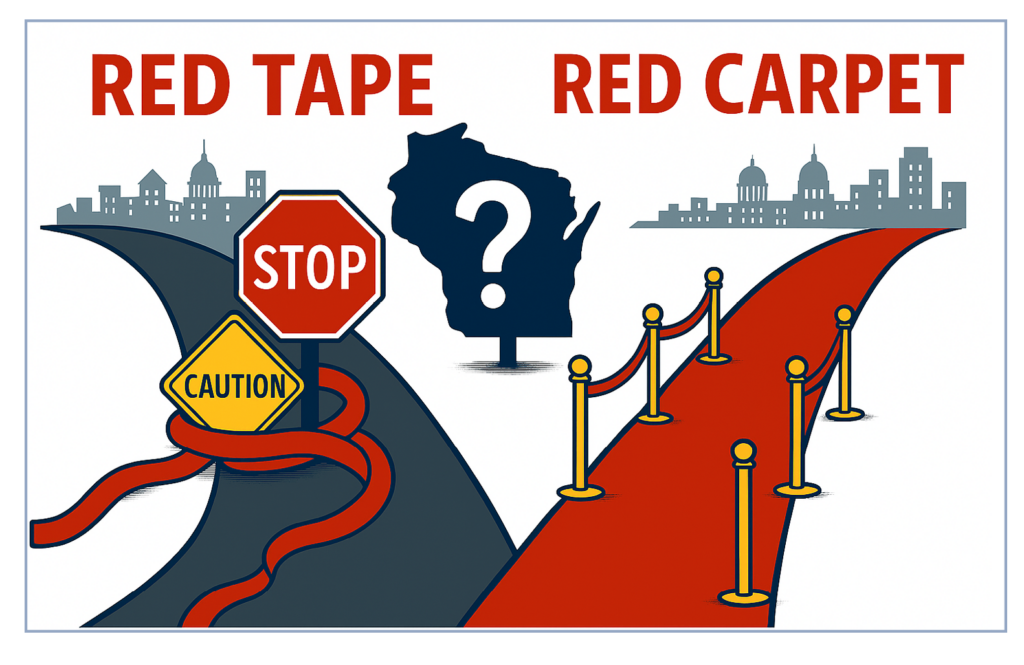
When families and businesses look for a home, they make calculated decisions and weigh the pros and cons. Some states roll out the red carpet for businesses. Other states roll out the red tape. Wisconsin has to decide which state it wants to be.
A declining population, a stagnant workforce, an unworkable regulatory environment, poor educational outcomes, unaffordable health care, and a hefty tax burden on middle-class families and businesses are all issues that threaten our state’s future.
These pressures erode affordability for families and employers, and ultimately drive up costs, making it harder for people to live, work, and build a future in Wisconsin.
Demographics & Workforce
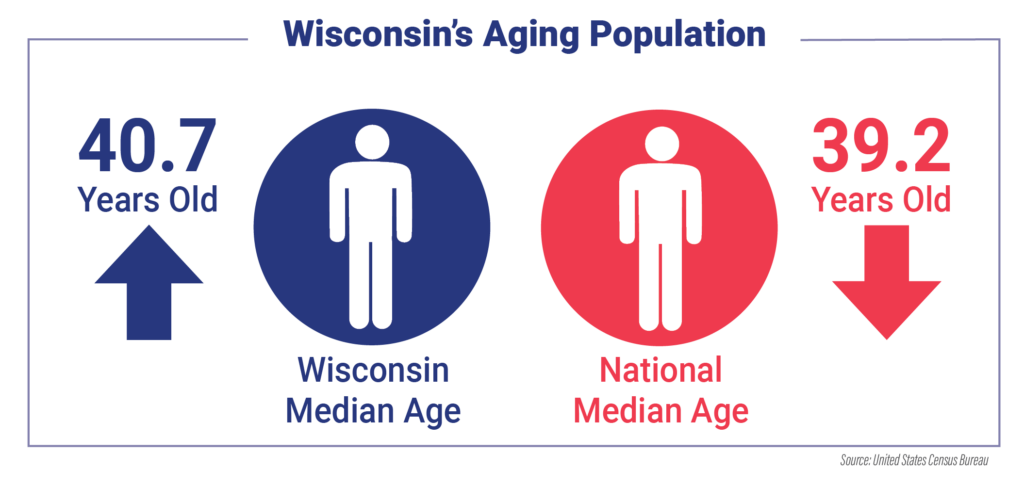
Wisconsin’s population growth consistently lags the national average. Real‑time data only reinforces that conclusion. In short, the state’s population trends are stagnant.
That stagnation masks deeper challenges. Birth rates are falling. Mortality rates are concerning. And Wisconsin continues to struggle to attract working‑age residents. Together, these forces are reshaping the state’s workforce, economy, and long‑term outlook.
Manufacturing, Taxes, & Regulations
Manufacturing is the bedrock of Wisconsin’s economy. The industry employs nearly half a million Wisconsinites, supporting an extensive network of trade, foreign investment, and high-value industries.
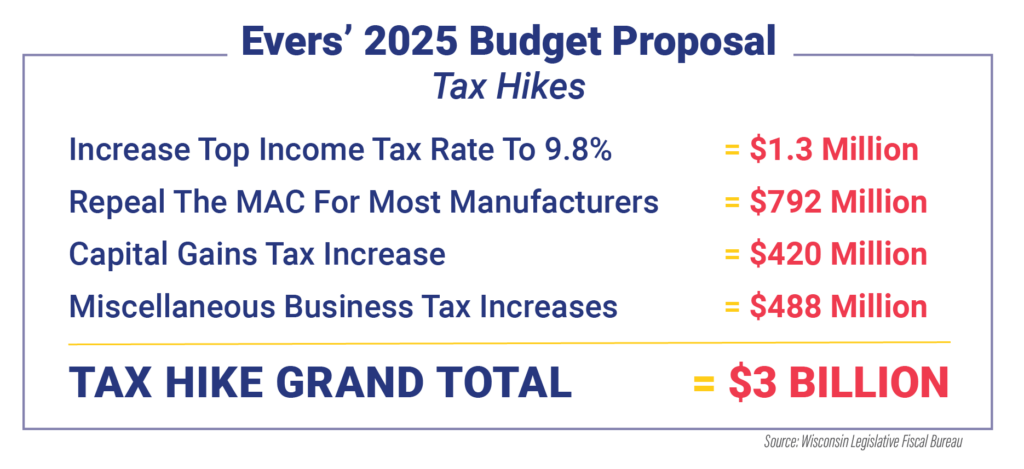
Unfortunately, recent proposals from Governor Tony Evers and certain lawmakers have introduced uncertainty and potential financial strain on manufacturers and businesses across the state, which would, in turn, harm families trying to make ends meet.
From business and individual tax increases to changes in tax credits and incentives, these proposals risk making Wisconsin less attractive for investment and expansion.
Health Care
Wisconsin’s health care costs are out of control. Far too often, Wisconsin families are skipping vital appointments, postponing critical medical procedures, and rationing prescriptions. It’s not because they don’t care about their family’s health – it’s because they can’t afford it.
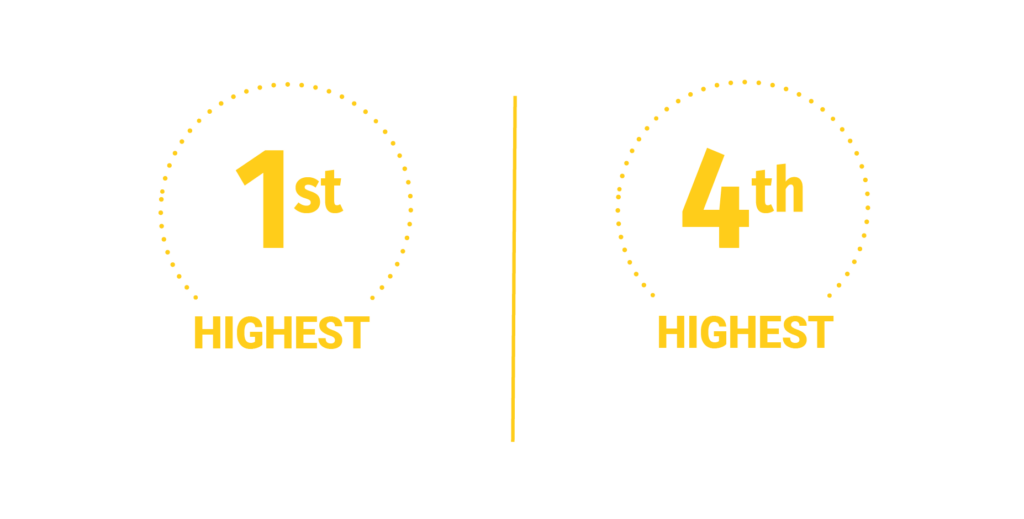
As the nation’s most expensive state for workers’ compensation medical fees and the fourth most expensive for hospital charges, Wisconsin must make substantial changes to the industry. To combat rising and unaffordable health care costs, Wisconsin can enact and expand a few key policies. These policies – maintaining employer-based coverage, improving price transparency, and expanding fee schedules – are reasonable, attainable, and popular.